

my take on LLM use
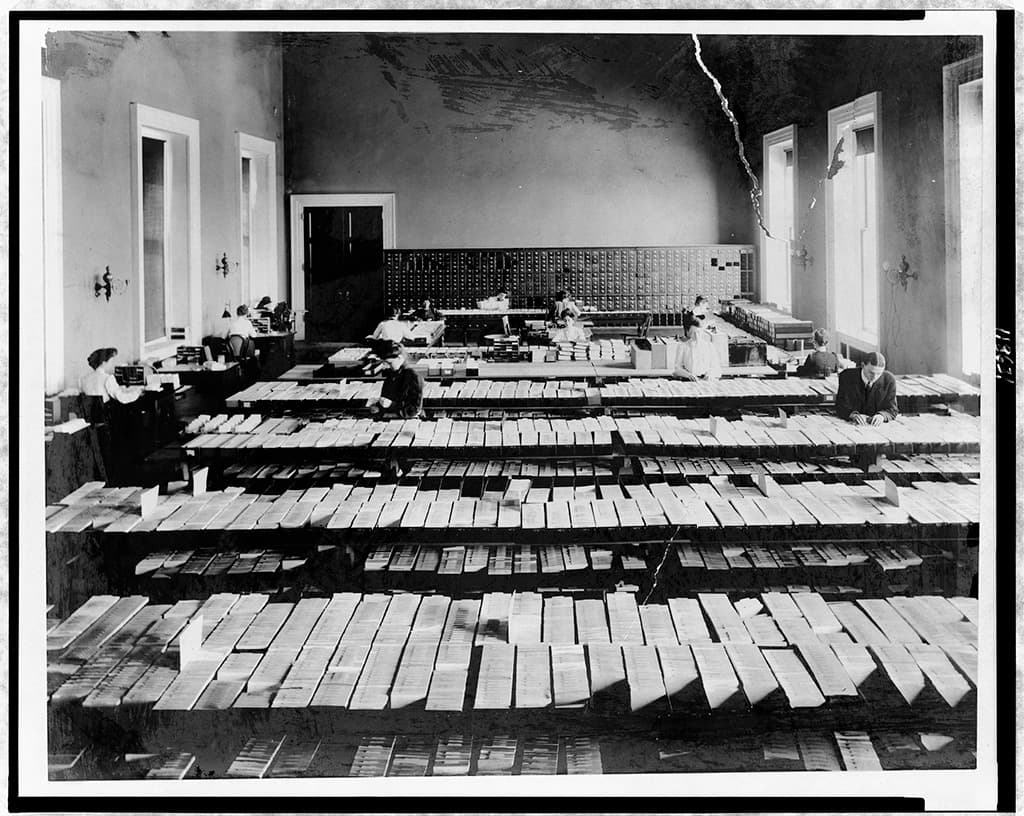
This is the catalog for the US Library of Congress, in early 20C. We look at this nowadays and smile at how fast we can find any needle anywhere in this haystack. It could amazingly all fit inside our pocket, too. This is all done and dusted, amazing what was accomplished in a hundred years... done.
Or is it?
Storing all these cards, sorting them by dozens of criteria, full-text searching random words is all easy now. But all these cards, they have to be written in the first place, haven't they ? I hear you going "no they don't", and it is true that Google can find pretty much anything without using any such cards. I've been noticing one thing though: openGraph nodes, twitter cards, this type of rich bookmark, they all look similar to these old fashioned cards librarians and archivists have been using for as long as there has been archives...
Imagine having such a card written for every file in your archives, for every photo in your collection. It'd make everything so much easier to find... But, hey, who has time for that ? Do you see me painstakingly writing thousands of little cards, finding and listing important details for each and every one, repeatedly saying the same thing for similar ones ? Nobody would do that, even if you paid them to...
A LLM will. It's what they do best: rewriting text concisely, repeatedly, unimaginatively. Not only that, but it can happen right here on your own computer, a small model like Gemma3 4B is enough. The machine is able to be more than a black box giving answers, it can be an always tidy space where you, the user, can find your own way.
That's my take about AI (and tech in general): it's not about doing things humans already do and replacing them, revolution is about things that simply could not be done before. It's about empowerment.

girolamo
- a C++ project
- Rediscovering CMake
- my take on LLM use
- sqlite for metadata